
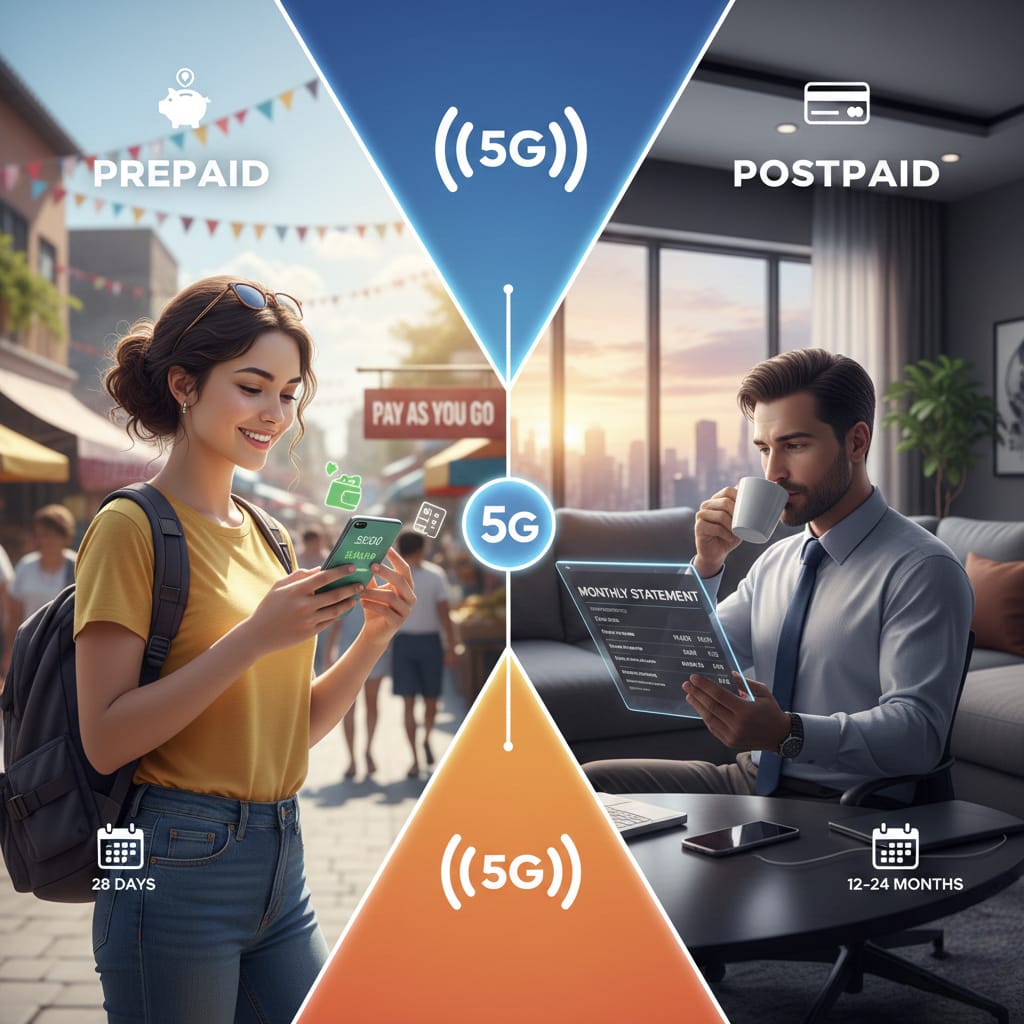
Choosing between a prepaid and a postpaid mobile plan in 2026 is no longer just about “paying now vs. paying later.” With the rise of 5G, bundled streaming services, and family data sharing, the lines have blurred.
Here is a breakdown of the benefits of each to help you decide which fits your lifestyle.
1. Prepaid Plans: The Budget Architect
Prepaid plans are perfect for those who want total transparency and zero commitment. You buy your “credits” or plan upfront, and once they’re gone, they’re gone.
- Ultimate Budget Control: Since you pay before you play, there is zero risk of “bill shock.” You will never find a mysterious roaming charge or data overage fee on a prepaid plan.
- No Credit Checks: Unlike postpaid, prepaid plans don’t require a credit history. This makes them the go-to for students, teenagers, or anyone looking to keep their financial footprint light.
- Total Flexibility: You aren’t locked into a 12 or 24-month contract. If a competitor offers a better deal next month, you can simply stop recharging and switch.
- Customizable Duration: In 2026, many carriers offer unique “long-validity” prepaid packs (e.g., 84 days or 365 days), which often end up being cheaper per month than any postpaid alternative.
2. Postpaid Plans: The Premium Experience
Postpaid is designed for the “set it and forget it” user. You use the service all month and receive a bill at the end.
- The “Perks” Ecosystem: This is the biggest draw. Most flagship postpaid plans now come bundled with OTT subscriptions (like Netflix, Disney+, or Amazon Prime) at no extra cost. If you already pay for these separately, a postpaid plan can actually save you money.
- Family Plans & Data Sharing: Postpaid is superior for households. You can add multiple lines to one account, share a massive pool of data, and manage everything through a single bill.
- Priority Network Access: During times of heavy congestion (like at a stadium or a busy metro station), carriers often give “Network Priority” to postpaid users, ensuring your 5G speeds stay fast while others might lag.
- Convenience: You never have to worry about your service cutting out in the middle of an important call because you “forgot to recharge.” It’s a seamless, continuous connection.
Comparison Summary
| Feature | Prepaid | Postpaid |
| Payment | Upfront (Pay-before-use) | Monthly (Pay-after-use) |
| Commitment | None (No contracts) | Often includes contracts/credit checks |
| Overages | Impossible | Possible (if not on an unlimited plan) |
| Extras | Usually none (Basic) | OTT Apps, Family Sharing, Priority Support |
| Best For | Students, Budgeters, Light Users | Professionals, Families, Heavy Streamers |
Which should you choose?
- Choose Prepaid if: You have a fixed budget, use Wi-Fi most of the time, and want the freedom to change plans whenever you like.
- Choose Postpaid if: You want a premium experience, you value “free” streaming subscriptions, or you are managing mobile lines for an entire family.
Would you like me to compare the specific prepaid and postpaid offerings from major carriers like Verizon, AT&T, or Jio?