
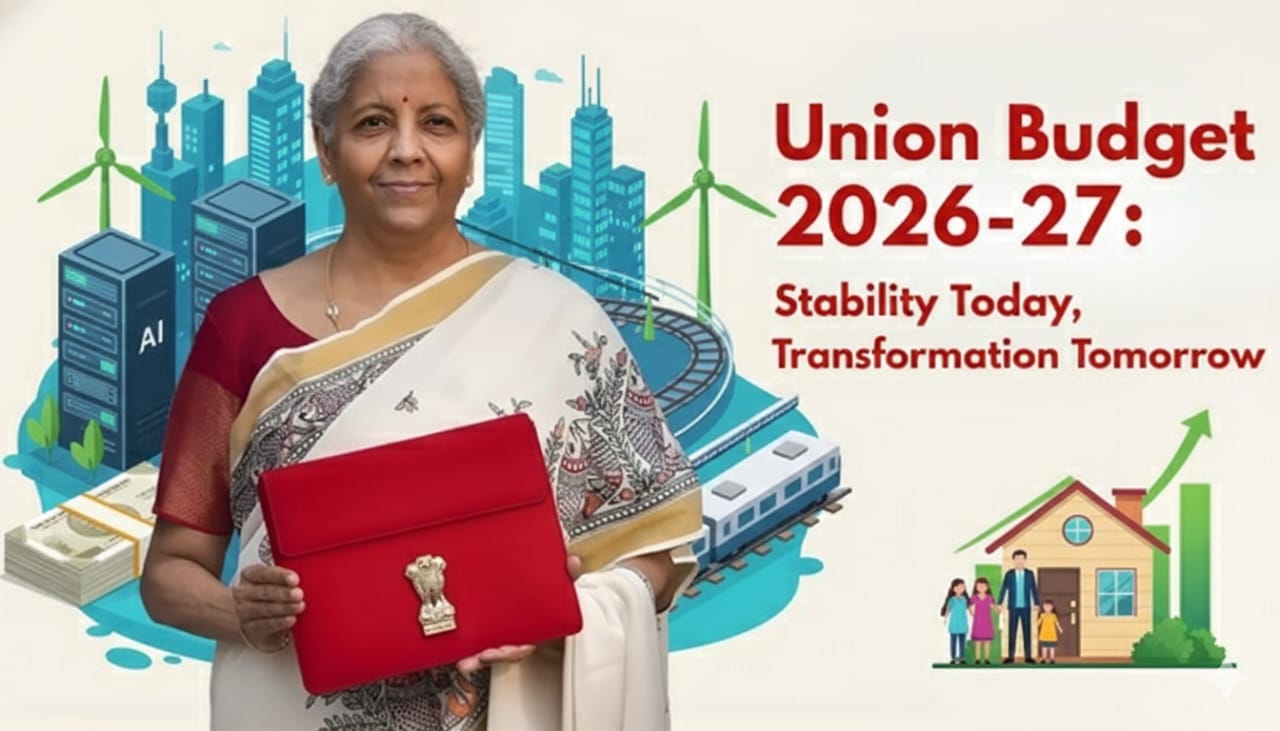
Union Budget 2026: Balancing the “Common Man” with “Viksit Bharat”
As February 1st approaches, all eyes in India are on the North Block. The Union Budget 2026-27 is more than just a balance sheet; it is the strategic roadmap for an economy navigating global volatility while sprinting toward the “Viksit Bharat” (Developed India) 2047 goal.
From the local tea stall to the high-rise boardrooms of Mumbai, everyone has a “wish list.” Here is a breakdown of what to expect and why this year’s budget feels different.
1. The Taxpayer’s Pulse: Simplification over Sops?
Last year’s budget made headlines by making income up to ₹12 lakh tax-free under the New Tax Regime. This year, the focus is likely on refinement and simplification.
- The “Standard” Shift: There are strong rumors of the Standard Deduction increasing from ₹75,000 to ₹1,00,000. This would provide a much-needed cushion against persistent inflation for the salaried class.
- The Death of the Old Regime? With nearly 72% of taxpayers already migrated to the New Tax Regime, experts are watching to see if the government provides more “nudges” (like higher rebates) to phase out the old system entirely.
- Housing Relief: To revive the affordable housing segment, we might see the ₹2 lakh interest deduction limit under Section 24(b) get a boost, or potentially even be introduced into the New Tax Regime.
2. Infrastructure: The ₹3 Lakh Crore Dream
Infrastructure remains the government’s favorite engine for growth. Industry leaders are pushing for a massive ₹3 lakh crore allocation specifically for state-level infrastructure projects.
- Railways & Logistics: Expect a heavy lean toward “Multi-modal Logistics Parks” and the modernization of aging rail corridors. The goal? To bring India’s logistics cost down to single digits.
- The AI Frontier: For the first time, we expect specific tax breaks and “Production Linked Incentives” (PLI) for AI Hardware and Data Centers, positioning India as more than just a software hub.
3. The “Make in India” 2.0
The manufacturing sector is looking for a “level playing field.”
- Green Energy: Look out for GST rationalization on Battery Energy Storage Systems (BESS) and green hydrogen.
- The MSME Lifeline: Small businesses are hoping for a dedicated “Risk Guarantee Fund” to make credit access easier as they grapple with global trade uncertainties and new carbon taxes (like CBAM) from the West.
Summary Table: Key Areas to Watch
| Sector | Primary Expectation | Goal |
| Personal Tax | Increase in Standard Deduction to ₹1L | Boost disposable income |
| Real Estate | Reintroducing CLSS (Credit Linked Subsidy) | Revive affordable housing |
| Technology | Incentives for AI chips and GPUs | Digital sovereignty |
| Fiscal Policy | Fiscal Deficit target of ~4.3% | Maintain global investor confidence |
The Bottom Line
Budget 2026 isn’t expected to be a “populist” bonanza. Instead, it looks like a “Precision Budget”—targeting specific sectors like AI, green energy, and middle-class consumption to ensure the growth engine doesn’t stall.
As Finance Minister Nirmala Sitharaman prepares her briefcase, the theme is clear: Stability today, Transformation tomorrow.