
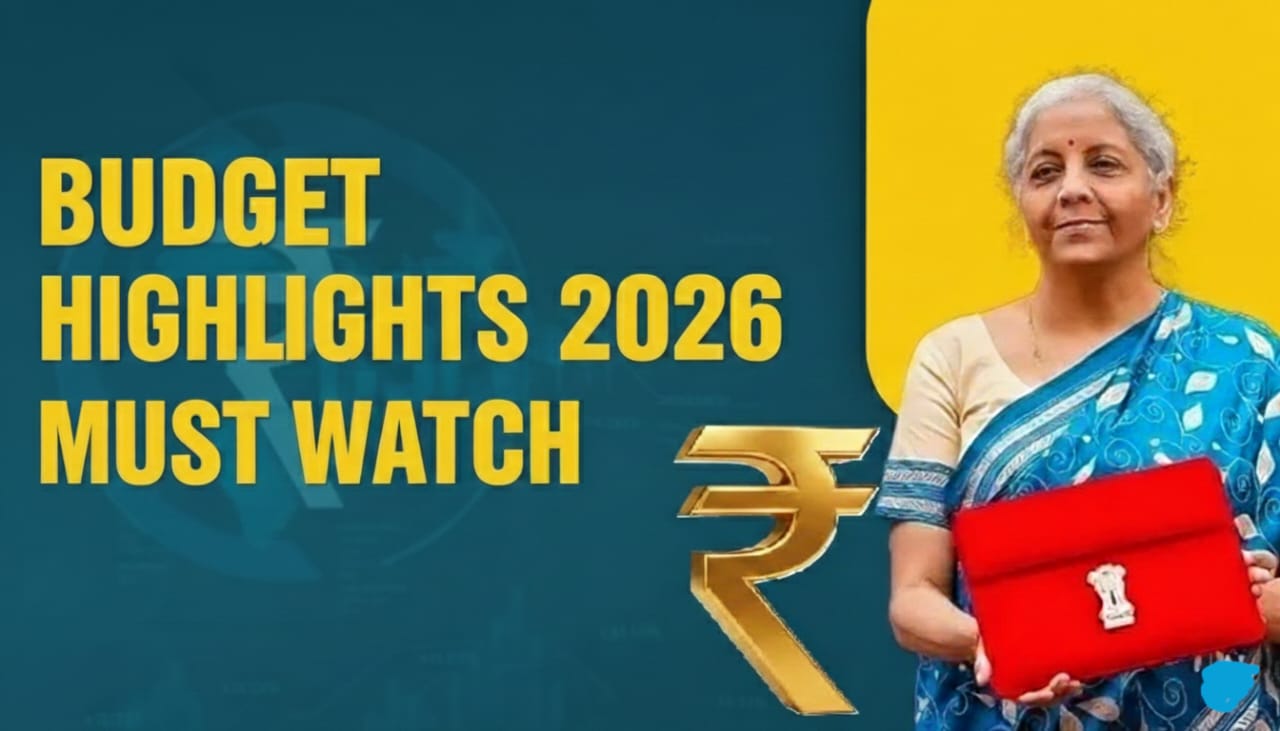
Today, Finance Minister Nirmala Sitharaman presented the Union Budget 2026-27, marking a strategic shift toward a “productivity-led growth” model. With the overarching theme of Viksit Bharat (Developed India), the budget balances aggressive infrastructure spending with disciplined fiscal consolidation.
Here is your comprehensive breakdown of the key highlights and what they mean for you.
1. The Big Numbers: Growth & Discipline
The government is walking a tightrope between spending for the future and keeping the deficit in check.
- Fiscal Deficit: Targeted at 4.3% of GDP for FY27 (down from 4.4% in FY26).
- Capital Expenditure (Capex): Increased to ₹12.2 lakh crore, a steady rise aimed at fueling infrastructure.
- GDP Growth: Projected at 10.5–11% (Nominal) for the upcoming year.
2. Direct Tax: Simpler Rules, Fewer Headaches
While there were no massive shifts in income tax slabs today, the focus was squarely on ease of compliance and the introduction of the New Income Tax Act (effective April 1, 2026).
- Revised Returns: You now have until March 31 (instead of Dec 31) to revise your tax returns.
- TCS Relief: Tax Collected at Source on foreign tour packages and remittances for education/medical care has been slashed from 5-20% to a flat 2%.
- MAT Reduction: For corporates, the Minimum Alternate Tax (MAT) has been reduced from 15% to 14%.
- STT Hike: Investors should note a hike in the Securities Transaction Tax (STT) on futures (to 0.05%) and options (to 0.15%).
3. Infrastructure & “City Economic Regions”
The budget moves beyond just “building roads” to creating integrated economic hubs.
- High-Speed Rail: Plans for seven new high-speed rail corridors were announced.
- Urban Challenge Fund: A ₹1 lakh crore fund to transform Tier-II and Tier-III cities into “growth hubs.”
- Waterways: 20 new National Waterways are on the cards to boost coastal shipping and inland trade.
4. The “Biopharma Shakti” & Tech Push
India is doubling down on its “Pharmacy of the World” status while embracing AI.
- Biopharma Shakti: A ₹10,000 crore outlay to make India a global hub for biologics and medicines for non-communicable diseases (cancer, diabetes).
- Semiconductor Mission 2.0: Accelerated funding for the ISM 2.0 to secure electronics supply chains.
- Rare Earth Corridors: New corridors in Odisha, Kerala, Andhra Pradesh, and Tamil Nadu to boost mining of critical minerals.
5. Agriculture & Rural Economy
The budget seeks to turn farmers into “agri-entrepreneurs” through technology.
- Bharat-VISTAAR: A multilingual AI-based platform to provide real-time, customized advisory services to farmers.
- Natural Farming: A push for plantation crops (cashew, cocoa, and sandalwood) to make India a global brand by 2030.
- SHE-Marts: Launching dedicated marketplaces for rural women-led enterprises.
Summary Table: Budget 2026 at a Glance
| Category | Key Announcement | Impact |
| Taxation | New Income Tax Act (April 2026) | Simpler filing and fewer disputes. |
| Travel | TCS on foreign trips cut to 2% | Cheaper international holidays. |
| SME/MSME | ₹10,000 crore SME Growth Fund | Better liquidity for small businesses. |
| Health | 3 new Institutes of Ayurveda | Focus on traditional medicine & R&D. |
| Defense | 20% estimated hike in allocation | Push for “Atmanirbharta” and tech-led warfare. |
The Verdict
The 2026 Budget isn’t about “populist giveaways.” Instead, it is a structural roadmap. By cutting TCS for travelers, simplifying tax laws for the middle class, and pouring money into high-tech manufacturing, the government is betting that productivity—not just consumption—will carry India to its $5 trillion goal.