
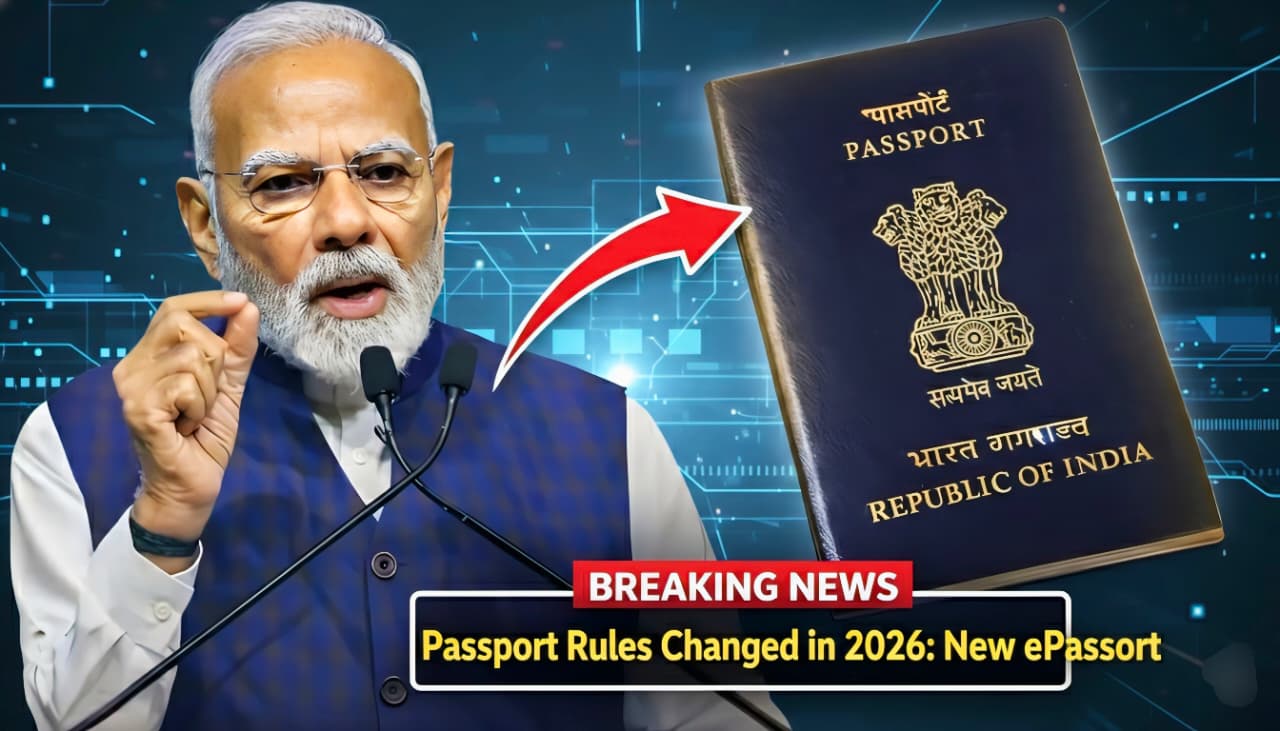
Getting your travel documents in order is the first step toward that dream international vacation or business trip. As we move into 2026, the Indian Ministry of External Affairs has continued to refine the passport application process to make it more digital, secure, and user-friendly.
Whether you’re a first-time applicant or looking to renew, here is everything you need to know about the updated passport rules, fees, and procedures for 2026.
What’s New in 2026?
The focus this year is on efficiency and digital integration. The days of carrying bulky folders of documents are largely over.
- Digital Integration: The system now pulls more data directly from DigiLocker and the Aadhaar database, reducing the need for physical copies.
- ePassports: The nationwide rollout of chip-based ePassports is now the standard. These include an embedded RFID chip to enhance security and speed up immigration at international airports.
- Faster Police Verification: The mPassport Police App has been upgraded to allow real-time verification, often completing the process in under 5 days in major cities.
Required Documents (Simplified)
The 2026 guidelines emphasize a “minimalist” document approach. For most applicants, the following “Big Three” are all you need:
1. Proof of Date of Birth (DoB)
You can provide any one of the following:
- Birth Certificate issued by a municipal authority.
- Aadhaar Card (now widely accepted as a DoB proof).
- PAN Card.
- School Leaving Certificate / Matriculation Certificate.
2. Proof of Identity & Address
- Aadhaar Card: Still the most powerful document; it serves as both identity and address proof.
- Voter ID Card.
- Utility Bills: Electricity, Water, or Postpaid Mobile bills (must be in your name).
- Rent Agreement: (Registered) along with a utility bill.
Note: For minors, the parent’s passport or address proof is sufficient.
Fee Structure for 2026
While the base fees have remained stable, ensure you choose the right category to avoid overpayment.
| Application Type | Booklet Size | Normal Fee | Tatkaal Fee (Additional) | Total Tatkaal Cost |
| Adult (Fresh/Re-issue) | 36 Pages | ₹1,500 | ₹2,000 | ₹3,500 |
| Adult (Fresh/Re-issue) | 60 Pages | ₹2,000 | ₹2,000 | ₹4,000 |
| Minor (Below 18) | 36 Pages | ₹1,000 | ₹2,000 | ₹3,000 |
| Lost/Damaged Passport | 36 Pages | ₹3,000 | ₹2,000 | ₹5,000 |
- Discounts: A 10% discount on the application fee is applicable for fresh applications for minors (up to age 8) and senior citizens (age 60+).
The Step-by-Step Process
Step 1: Online Registration
Visit the Official Passport Seva Portal. Register and create a login ID.
Step 2: Form Filling & DigiLocker
Fill out the application form online. Pro Tip: Use the “Fetch from DigiLocker” option for your Aadhaar and Marksheets to skip manual entry and reduce the risk of typos.
Step 3: Payment & Appointment
You must pay the fee online to book an appointment. You can now choose any Passport Seva Kendra (PSK) or Post Office Passport Seva Kendra (POPSK) across India, regardless of your current address.
Step 4: The Visit
On the day of your appointment:
- Carry your original documents (and one set of self-attested copies).
- Your biometrics (fingerprints and photo) will be taken.
- An ePassport chip initialization will be performed for your specific profile.
Step 5: Police Verification & Delivery
Once the PSK clears your file, the local police station will be notified. After a successful verification, your passport is printed and dispatched via Speed Post.
Common Mistakes to Avoid
- Name Mismatches: Ensure your name is spelled exactly the same way on your Aadhaar, PAN, and Education certificates.
- Incomplete Address History: You must list all addresses where you have lived in the last 12 months.
- Blurred Documents: If uploading digital copies, ensure they are high-resolution and readable.