
Seconds from the Brink: The 2026 Doomsday Clock Update
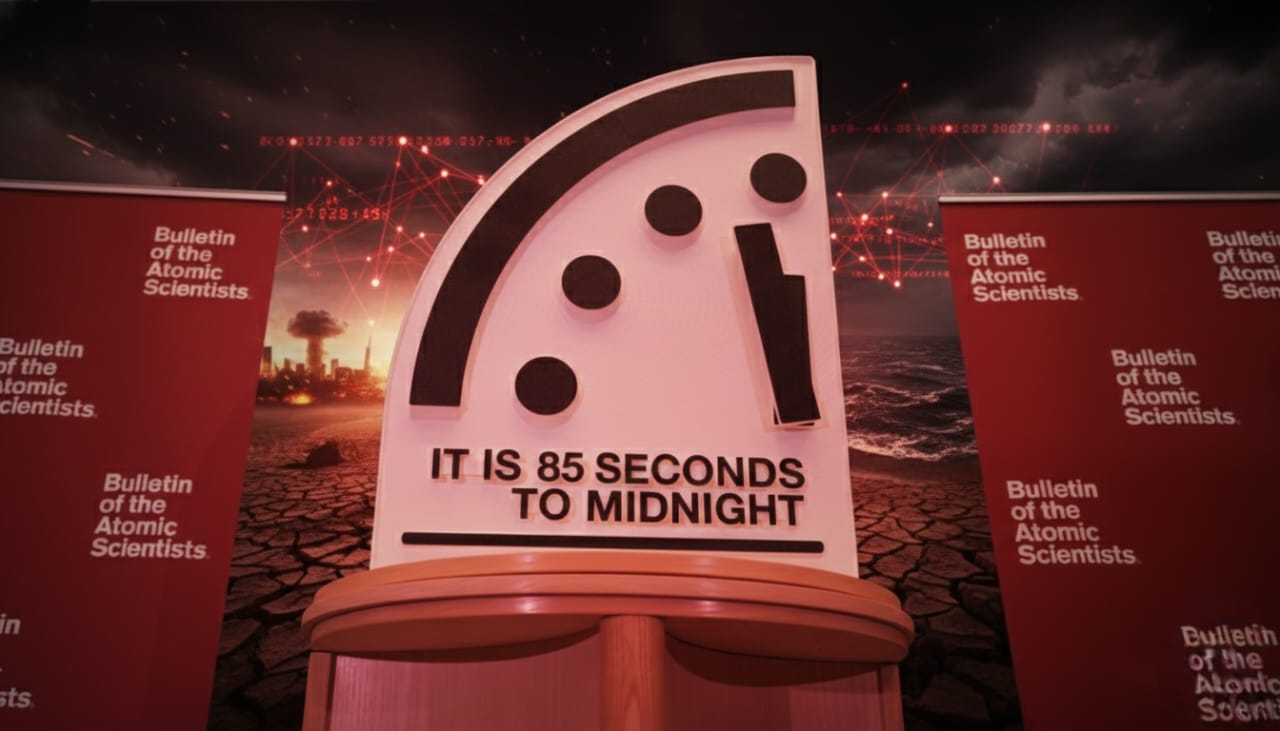
The world just got a little bit smaller—and a lot more dangerous. On January 27, 2026, the Bulletin of the Atomic Scientists made their annual announcement, and the news is sobering. The hands of the Doomsday Clock have been moved forward by four seconds, leaving us at a chilling 85 seconds to midnight.
This marks the closest the clock has ever been to global catastrophe since its inception in 1947. To put that in perspective, even during the most frozen heights of the Cold War, we were never this close to the metaphorical midnight.
Why is the Clock Ticking Forward?
The Science and Security Board cited a “convergence of escalating dangers” that have eroded international stability over the past year. While the clock was once a singular measure of nuclear threat, it now weighs several existential risks:
- Nuclear Instability: The expiration of key arms control treaties and a shift toward “winner-takes-all” geopolitics have heightened the risk of nuclear miscalculation.
- The Climate Crisis: 2025 was officially recorded as the hottest year in history. Despite this, global carbon emissions continue to rise, and the board warned that ecological collapse is now moving at a pace that rivals the threat of a bomb.
- The AI “Wild West”: For the first time, the Bulletin placed significant weight on the uncontrolled integration of Artificial Intelligence into nuclear command systems and its role in “informational armageddon”—the spread of deep-seated disinformation that makes global cooperation nearly impossible.
- Biological Risks: The potential for lab-leaked pathogens or the weaponization of biotechnology remains a persistent shadow over global health security.
A History of Seconds
The Doomsday Clock isn’t a crystal ball; it’s a reflection of our current reality. It has moved both ways in the past:
| Year | Time | Context |
| 1947 | 7 Minutes to Midnight | The Clock is first established. |
| 1991 | 17 Minutes to Midnight | The end of the Cold War (The “safest” we’ve ever been). |
| 2023 | 90 Seconds to Midnight | Concerns over the Russia-Ukraine war and climate failure. |
| 2025 | 89 Seconds to Midnight | Breakdown in international diplomacy. |
| 2026 | 85 Seconds to Midnight | Record-breaking heat, AI risks, and crumbling security norms. |
Is It Too Late?
The 85-second mark is a terrifying metric, but the Bulletin’s message isn’t one of inevitable doom. As CEO Alexandra Bell stated during the press conference, the clock is a call to action. Because these threats are man-made, they are also man-fixable.
The “seconds” we have left represent a window for intervention. Turning the clock back requires more than just hope; it requires a return to hard-nosed diplomacy, aggressive decarbonization, and international guardrails on emerging technologies like AI.
“The clock does not predict the future. It illuminates our current reality. The clock has turned back before, and it can again.” — Alexandra Bell, Bulletin of the Atomic Scientists
What We Can Do
While we may not sit at the negotiating table for nuclear treaties, the “climate” of public opinion matters. Supporting policies that prioritize international cooperation and sustainable energy is the only way to nudge that minute hand back into the “minutes” and out of the “seconds.”
What do you think is the biggest threat facing the world today? Let’s discuss in the comments below.